Showing posts with label computers. Show all posts

Wednesday, 18 July 2012

Firefox 14 Officially Released


The official notes for the latest version of Firefox for desktop are now available.
the new version is 14.0.1 and it is currently available for all supported platforms (Windows, Mac and Linux).

 Besides the much-touted features (HTTPS for Google searches, full-screen support for Mac OS X Lion and URL auto-complete in Awesome Bar) Firefox 14.0.1 also integrates opt-in activation for plugins; this means that plugins are no longer allowed to run without user’s interaction, which increases both security and performance of the browser.

Friday, 13 July 2012

Ubisoft may not go into the future after Assassin's Creed III


A
ssassin’s Creed is one of the most popular games today. The series has an interesting plot that takes place in the near future, along with plots that take place in certain periods of history, such as the time of the Holy Crusades in Assassin's Creed, the Renaissance in Assassin’s Creed 2, and Assassin’s Creed: Brotherhood, and the rise of Constantinople in Assassin’s Creed: Revelations.


The upcoming Assassin’s Creed III will take place during the American fight for Independence, and is to feature a new protagonist by the name of Connor. But there is no guarantee that the next installment will be set after America’s Independence. "I don't think we'll necessarily always go forward, or we're dooming ourselves to run out of history," the game's creative director, Alex Hutchinson, told fans at a Comic-Con panel recently.


During the presentation, developers from Ubisoft Entertainment demonstrated some time-bending Assassin's Creed III gameplay set in an early rendition of Boston. The scenes featured Native American protagonist Connor ascending brick buildings, slipping past redcoats and bashing Scottish brawlers.


Hutchinson told the crowd - many of whom were dressed as hooded protagonists of the previous games, Altair and Ezio - that the developers originally planned for players to be able to scalp enemies as half-Mohawk, half-English assassin Connor, but that feature was later removed. "When we dug into it deeper, we found it really horrifying," Hutchinson said. Assassin's Creed III is set for release on October 30 for the Xbox 360 and the PlayStation 3, but the PC version has been delayed.


The new Assassin, Connor

The Assassin’s Creed series deals with a secret war that has lasted millennia between the Assassins and the Templars. The Assassins seek to fight for the free will of people, while the Templars seek to control them. The first game was set during the Holy Crusades, in Jerusalem. Protagonist Altaïr ibn-La'Ahad would have to jump from rooftops and sneak into groups of people in order to find and assassinate his targets.

The second game was set during the Renaissance era, in Florence. The main protagonist of the “II” series of games (which are Assassin’s Creed II, Assassin's Creed: Brotherhood, and Assassin’s Creed: Revelations) is Ezio Auditore. The II series of games dealt with the evolution of Ezio as a character, who starts out as a revenge-driven teenager only to become a highly-skilled master of Assassins. Altaïr also makes an appearance in Revelation, showing the aged assassin’s last few days. The secondary protagonist of the series is Desmond Miles, who is accessing his “genetic memory” to live the lives of his Ancestors Altaïr and Ezio.

Tuesday, 3 July 2012

AMD’s Radeon 8000 “Sea Islands” Family Detailed


As Nvidia is readying the new GK110 Kepler-based monster GPU targeted for GPU computing, and later for top-gaming performance, AMD is preparing its new Radeon 8000 “Sea Islands” GPU family.

 The top-performing member of the “Sea Islands” family is codenamed “Venus,” but we already reported on that here.

 The other members of the “Sea Islands” family are rumored to be called Sun, Oland and Mars, and their internal configurations will likely be:

Monday, 2 July 2012

Windows Tablets Not Ready for Heavy Gaming


While the industry expects tablets to outsell PCs in the following years, gaming outfit Alienware doesn’t see any direct competition from tablets for its own market. Alienware manager Eddy Goyanes said that tablets and PCs offer radically different gaming experiences, and tablets don’t have anything to offer serious gamers.

 Microsoft’s Surface, while probably upsetting some of the OEMs that were supposed to use Microsoft’s Windows RT and Windows 8 Tablet operating systems, is reportedly not going to compete for the true gamers’ attention.

 Windows tablets are mostly targeted at light, casual gamers, or social networking gaming and the market of gaming notebooks and desktop replacements (DTR) will likely remain unaffected by the increased tablet sales.

 Therefore, if gaming notebooks are not challenged by tablets, neither are powerful PC gaming systems, believes the Alienware exec.

Tuesday, 19 June 2012

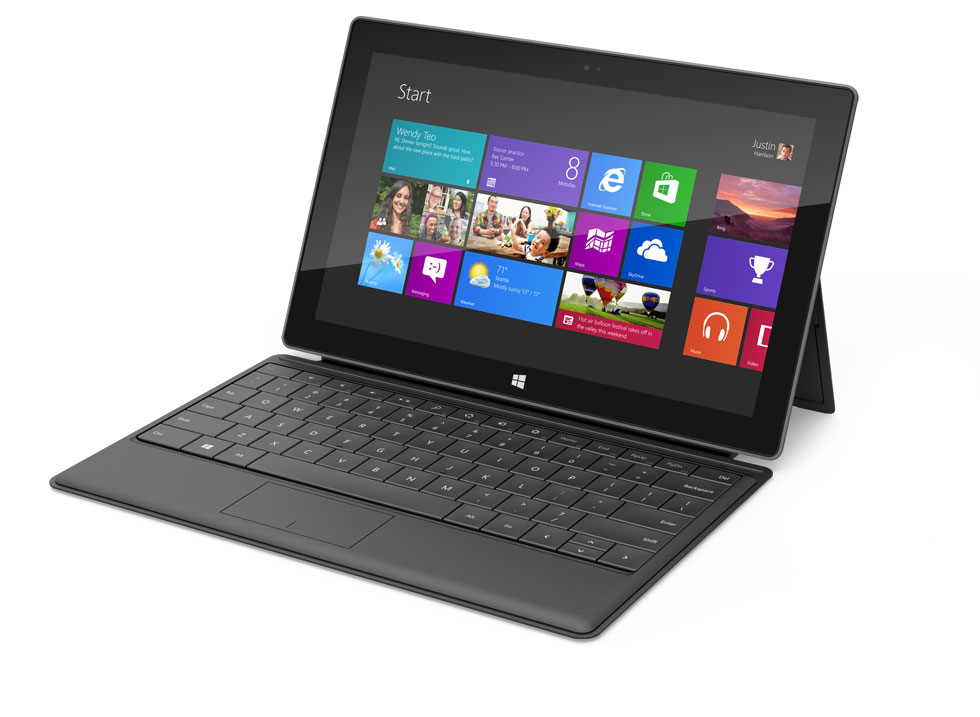
Microsoft announces 10.6″ Surface Tablet


At an event in Los Angeles, Microsoft has just announced its first tablet called the Surface. The screen is a 10.6″ unit and is covered by Gorilla Glass. Something unique is that the tablet comes with an inbuilt kickstand.

The tablet measures in at just 9.3mm  and is equipped with a Full USB 2 port. A microSD card slot is included as well. The tablet is encased in a magnesium case with a PVD finish. Liquid metal ensures that the weight remains fairly light at 1.5lbs. 32 and 64GB models will be available. Pretty interesting is the fact that the cover doubles as a full multitouch tablet.

Friday, 18 May 2012

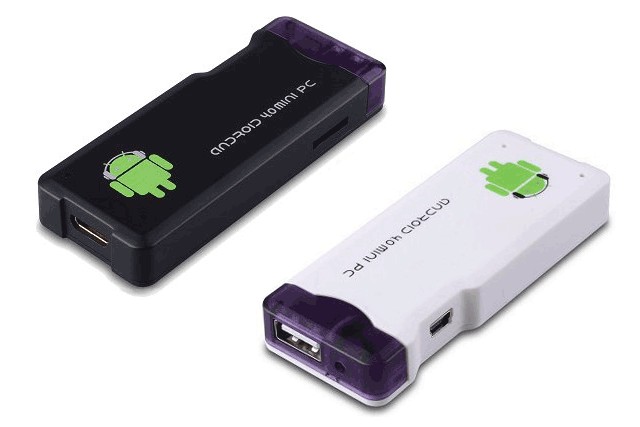
Android PC available for $74


The MK802 may look like an ordinary USB stick, but it’s a fully-functional computer.

Of course, you need to attach it to a display, and connect some sort of keyboard/mouse combo, but the MK802 could very well be the smallest PC around.

Perhaps you remember the portable FXI dual-core USB stick, which let you turn any HDMI display into an Android-powered computer?

Well, along those lines, a Chinese manufacturer has created the MK802, which is a more affordable version of the same device.

There are, of course, some trade-offs involved here. The MK802 is from an unspecified manufacturer, and has a single core 1.5Ghz processor (as opposed to the dual-core FXI). Also, the HDMI is a connector, rather than a socket, so you’ll need to use a cable rather than just stick it into the back of a TV.

The MK802 comes with 512 MB of RAM, WiFi connectivity, and 4GB of internal storage. There’s a undetermined “3D Graphical processor” inside, whatever that means, but it does come with a plethora of cables and adapters for connectivity. It comes with Android preinstalled, although you should be able to load other platforms onto it.

Wednesday, 9 May 2012

DDR4 memory coming to PCs, notebooks in 2013


If you thought DDR3 was a mature and widespread memory standard for desktops and notebooks, you’d have thought right, but things are likely to change as quickly as next year. Micron, one of the top memory chip manufacturers is suggesting that DDR4, the next major standard in memory is going to hit the market next year. Desktops and notebooks will be on the receiving end of the new standard by the end of 2013. Micron has already announced that they have DDR4 DRAM modules ready already and implementation can begin in 2013. There are partners and customers who’ve shown interest and given feedback on the new standard, they say.

technology should soon spread into the tablets and ultra-thin client markets. Micron feels that there are a ton of advantages to using DDR4 over DDR3 when it comes to the performance and power efficiency side of things. Micron worked alongside Nanya to develop the new chips that are now based on the 30nm fabrication process. The new memory is said to operate at a lower voltage of just 1.2V, as compared to the 1.5V required by DDR3 modules. This should help reduce power consumption on the devices, by quite a bi

Wednesday, 2 May 2012

Asus launches their flagship RT-N66U dual-band router in India


ASUS has just launched the RT-N66U dual-band wireless-N900 router for enthusiast-grade networking. The new flagship model of the award-winning Black Diamond series, it delivers leading performance on both 2.4GHz and 5GHz bands with up to 900Mbps in total bandwidth. Exclusive Ai Radar technology amplifies signal coverage vertically as well as horizontally to reach a wide area making it ideal for multi-level buildings. The newly-designed ASUSWRT dashboard interface lets users quickly set up the router and access network utilities in a few simple steps. The RT-N66U uses strict quality of service (QoS) standards to ensure optimized performance with download multitasking and multi-role server functionality. It is fully DLNA compatible and comes with twin USB 2.0 ports for easy connections to a wide range of devices. The router is available now for rs.13,000, excluding taxes.

The RT-N66U utilizes three detachable external antennas to ensure wide coverage in any environment. It operates using dual-band 2.4GHz/5GHz architecture with up to 450Mbps in bandwidth per band for a maximum 900Mbps in total. Dual-band connectivity provides enhanced bandwidth management and online multitasking. For instance, large amounts of HD content can be downloaded on the clearer and less crowded 5GHz band, while more mainstream tasks, such as web browsing occur on the 2.4GHz band. The RT-N66U handles up to 300,000 concurrent data sessions — about 20 times the throughput of basic routers. ASUS has also integrated exclusive Ai Radar technology into the RT-N66U, which makes use of the three antennas to amplify signals based on the number and position of devices connected to the network.

The RT-N66U was specially-designed with quality of service, or QoS, principles in mind. As its primary function is to provide the finest networking experience possible, it ships with extensive bandwidth management and traffic monitoring utilities. QoS optimizes available network resources for the specified task at hand. Similar to GameFirst technology on select ASUS motherboards, RT-N66U QoS capabilities allow for the inclusion of Download Master software, which oversees intense online gaming while downloading occurs in the background, as an example. Download Master also continues downloading with the connected PC turned off, saving you time and energy costs. Embedded into the ASUSWRT interface, QoS features detailed network data and statistics for users to easily track their usage over time. With full DLNA certification, the RT-N66U is compatible with a wide variety of devices and media formats, including Xbox 360, PlayStation 3, set top boxes, and smart TVs. It also doubles as a printer, file server, and 3G emitter (with 3G dongle connected) to extend coverage to additional devices and enable remote download management. It further functions as a complete FTP, Samba, iTunes, and UPnP AV server. Connections to printers and attached storage devices are made easier thanks to the inclusion of two USB 2.0 ports, further enhancing the RT-N66U’s multitasking abilities.

Sony VAIO launches T11 and T13, their first Ultrabooks


Sony has officially announced their first Ultrabooks, the VAIO T11 and T13. As you can guess, the former has a 11-inch display and the latter a 13-inch display.

Both Ultrabooks will feature a sleek magnesium and aluminum body that will be 17.8mm thick. You get a full set of ports, including Ethernet, VGA, HDMI, 1 x USB 2.0, 1 x USB 3.0 and also an SD card slot. It has the traditional VAIO chicklet keyboard and a MacBook style trackpad that will hopefully will be similarly good.

On the inside you get Intel’s Core i3-2367M processor with Intel HD 3000 graphics. You also get 4GB of RAM, 320GB hard drive (with the option to go for an SSD), Bluetooth, Wi-Fi and Windows 7 Home Premium 64-bit. The battery is said to last up to nine hours with the SSD model.

The pricing is yet to be announced but both models will go on sale later this month

Nvidia Geforce GTX 690 Price


NVIDIA GeForce GTX 690 is new dual GPU powered ( 2 x GTX 680) Graphics card which offers mind blowing performance at premium price. Nvidia GTX 690 will offer similar performance as GTX 680 in SLI configuration at lower TDP (300W).

NVIDIA GeForce GTX 690 Graphics Card Features:
3,072 NVIDIA CUDA cores
Chromium-plated aluminum body frame
4GB DDR4 Memory
Thixomolded magnesium alloy housing for vibration dampening and heat dissipation
28-nanometer Kepler architecture
10-phase power supply with a 10-layer (2 ounce copper PCB)
Dual vapor chambers for Efficient cooling using , a nickel-plated finstack and center-mounted axial fan with optimized fin pitch and air entry angles

?GeForce GTX 690 Technical Specifications:
Stream Processors 2 x 1536
Core GPU Clock 915MHz and Boost up to 1019MHz
Texture Units 2 x 128
ROPs 2 x 32
Dedicated Memory 2 x 2GB
Memory Type: GDDR5
Memory Clock 6.008GHz
Memory Bus Width 2 x 256-bit
Transistor Count 2 x 3.5B
FP64 1/24 FP32
Manufacturing Process: 28nm
TDP 300 watts

NVIDIA GeForce GTX 690 Price in India: Approx 55,000 ~ 60,000/- INR

Monday, 30 April 2012

Nvidia launches GTX 690, world's fastest graphics card


NVIDIA yesterday announced their GeForce GTX 690, which is touted to be the world's fastest consumer graphics card, at the moment. The card sports a bold industrial design and is powered by dual Kepler architecture-based GeForce GPUs, the GTX 690 is meticulously designed - inside and out - to deliver the most refined, elegant and smooth PC gaming experience possible. The surprise announcement was made by NVIDIA CEO and co-founder Jen-Hsun Huang during his keynote address at the NVIDIA Game Festival in Shanghai. There’s no denying that Nvidia have designed an incredibly sexy looking card for a reference design,which means board partners need not speed too much time on re-designing the cooler, simply slap on a sticker and you’re good to go. The NVIDIA GeForce GTX 690 GPU will be available in limited quantities, starting May 3, 2012, with wider availability by May 7, 2012 from NVIDIA's add-in card partners, including ASUS, EVGA, Gainward, Galaxy, Gigabyte, Inno3D, MSI, Palit and Zotac. The expected pricing is $999 (48,950).

Engineered to reach a new threshold in gaming performance, the GTX 690 also looks the part. Its array of innovative technologies is complemented by sleek materials that contribute to the exotic design of the card, including:
An exterior frame made from trivalent chromium-plated aluminum, providing excellent strength and durability
A fan housing made from a thixomolded magnesium alloy, which offers excellent heat dissipation and vibration dampening
High-efficiency power delivery with less resistance, lower power and less heat generated using a 10-phase, heavy-duty power supply with a 10-layer, two-ounce copper printed circuit board
Efficient cooling using dual vapor chambers, a nickel-plated finstack and center-mounted axial fan with optimized fin pitch and air entry angles
Low-profile components and ducted baseplate channels for unobstructed airflow, minimizing turbulence and improving acoustic quality

The GTX 690 is powered by a total of 3,072 NVIDIA CUDA cores for ultra-high-resolution gaming and multimonitor NVIDIA Surround configurations, the card delivers close to double the frame rates of the closest single GPU product, the GTX 680. Plus, it is more power efficient and quieter when compared to systems equipped with two GTX 680 cards running in NVIDIA SLI configuration. The GTX 690 graphics card is designed using GeForce GPUs based on NVIDIA's 28-nanometer Kepler architecture, following the introduction late last month of the GTX 680.


HDDs Will Not Get as Cheap as They Are Supposed to Be


With each passing day, the likelihood of HDDs never becoming as affordable as they used to be becomes higher and higher, and Western Digital is not helping to prevent that.

 In fact, Western Digital is a major contributing factor to the impression that HDD makers are only using the so-called HDD crisis as an excuse to keep prices at 200-300% of what they were last year.


We already saw that, even with the so-called HDD shortage, Seagate and Western Digital made big profits.

 Now, to add insult to injury, we have learned that Western Digital has mostly restored inventories to what they are supposed to be.

 “I am pleased to announce today that the recovery activities related to both WD operations and those of our supply chain partners impacted by the Thailand floods have reached a point where we now have the capability to adequately meet anticipated customer demand in the current quarter and beyond,” said John Coyne, chief executive officer of Western Digital.

 We can definitely see why he is so giddy about this. Western Digital is, essentially, selling as many HDDs as a year ago but at double the price (or more).

 There is also the advantage of time passage: after months of HDDs being overpriced, consumers have begun to resign themselves to the situation.

 It is all made worse by how HDDs are slightly “cheaper” than they were in January or late December, 2012, adding to the illusion that the storage devices are worth buying now.

 WD is also creating hybrid drives, HDDs with embedded NAND Flash memory. We can already see the company advertising them as cheap alternatives to SSDs, which it is also making, thus distracting potential buyers from the fact that, even then, the products are still too expensive.

 Sure, there are some facilities to repair after the Thai floods, but WD and Hitachi Global Storage Technologies, Like Seagate, have insurance for that. Throughout this whole mess, low supply has been the only reason HDDs being overpriced. Alas, even with this problem out of the way, the issue persists.